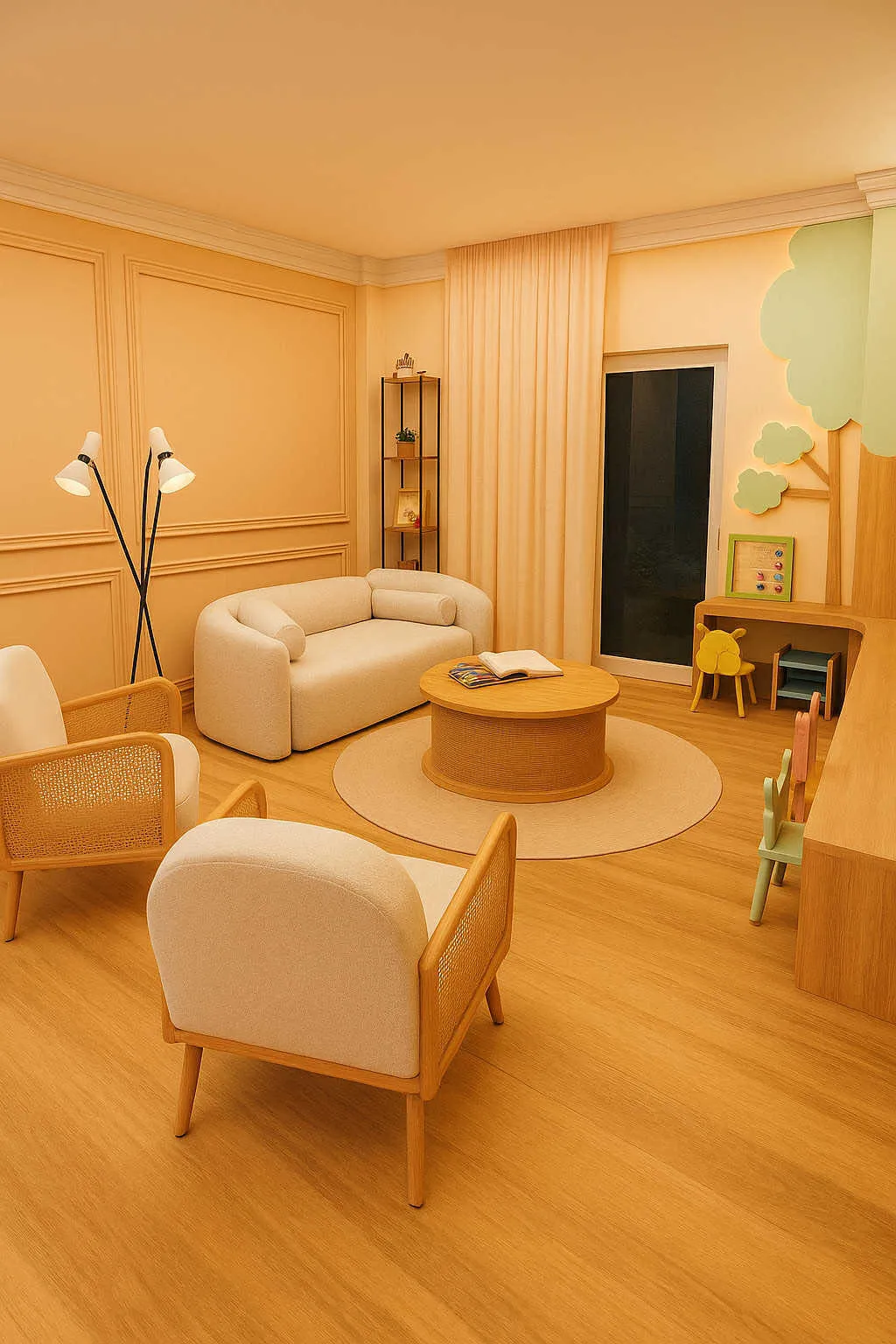
A medical space doesn't have to look like a hospital.
For decades, medical spaces in Greece followed the same template: white tiles, fluorescent lighting, plastic chairs in the waiting room. Functional? Maybe. Human? No.
Today, patients choose a doctor on more than the CV. The first point of contact is the space. And that impression stays.
What changes when you design for calm
Indirect, warm light in waiting areas. Nobody wants to wait for test results under lighting that feels like an operating room. Colour temperature directly affects heart rate.
Wood, fabric, natural materials where they can sit without breaking hygiene protocols. On chairs, on waiting-room walls, on reception cabinetry. Touch creates a sense of familiarity.
Patients don't want to be on display to everyone in the waiting room. But they also don't want to feel boxed in. Solutions: low wooden screens, plants, soft draped curtains instead of solid walls.
Acoustic absorption is one of the most underrated elements. A clinic that echoes betrays confidentiality. Ceiling panels, rugs, acoustic plasterboard — investment the client doesn't see, but feels.
A patient who feels safe in the space trusts the doctor.
— Perspective Constructions
In pediatric clinics the challenge doubles: you have to reassure the child without becoming childish. Curves instead of corners, pastels instead of clown colours, playful elements integrated into the architecture rather than stuck onto the walls.
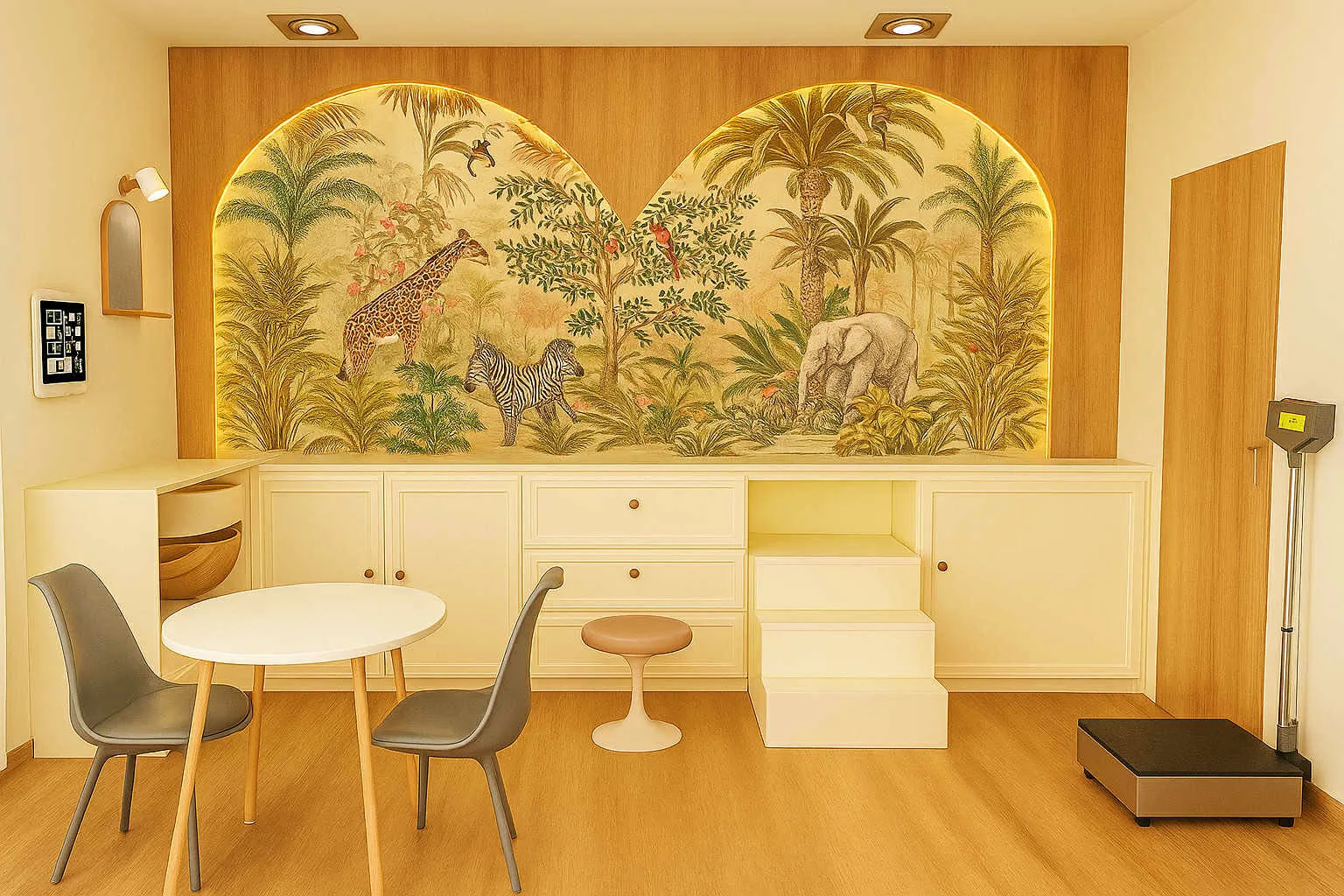
When we design medical spaces, we always start with the patient experience — and only then move to staff flow. The doctor works there every day. The patient comes once. That one visit is the one that counts.