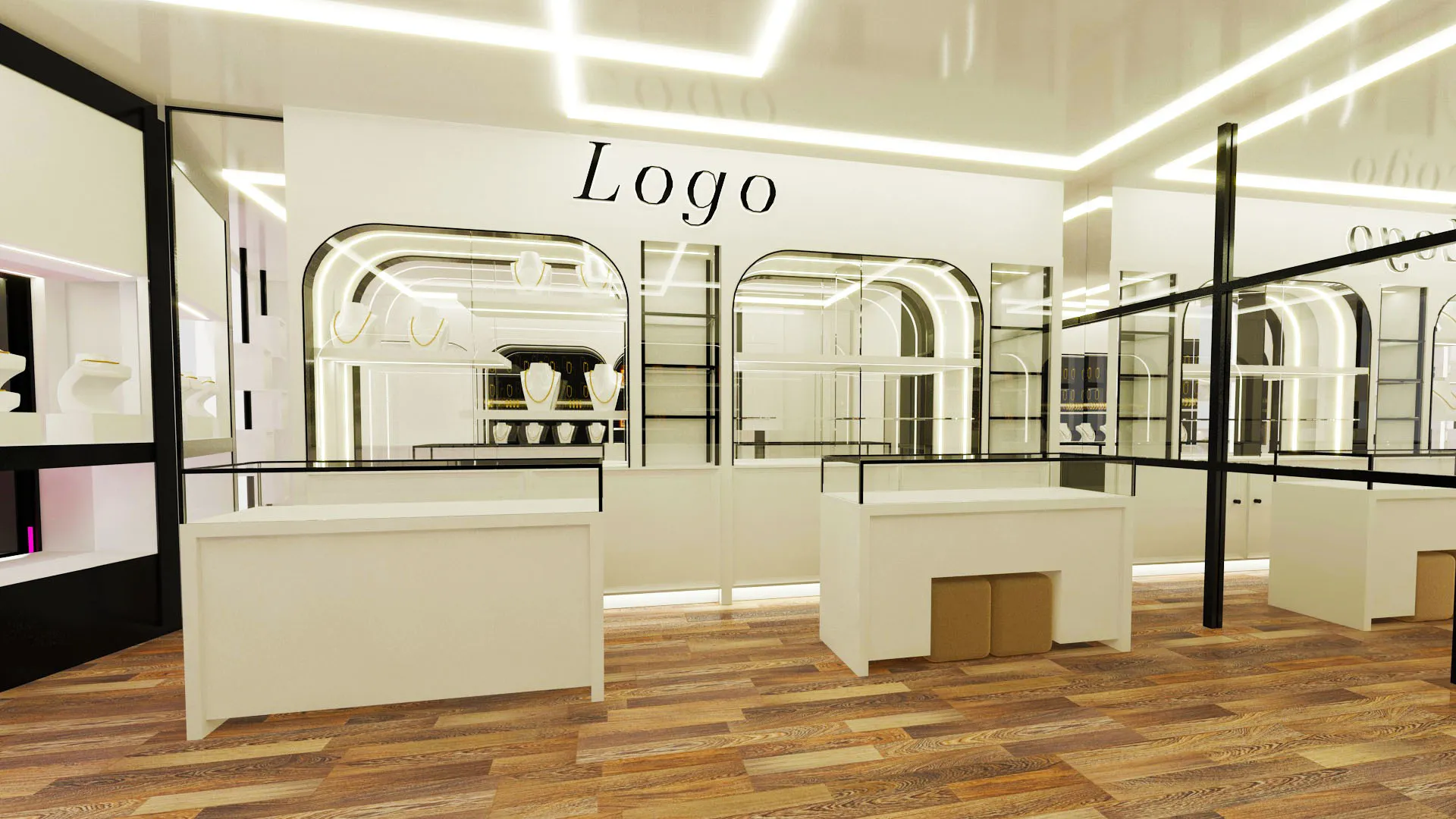
In high-end retail, the space doesn't serve the product — it legitimises it.
When a customer walks into a jewellery store or a boutique, the decision to stay has already been made in the first few seconds. The salesperson doesn't make it. The space does.
The fixture on the ceiling, the material of the counter, the height of the display case — all of them send a message before a word is spoken. The question isn't whether these elements communicate, but exactly what they're saying.
What makes a space feel like luxury
Luxury is declared through absence. A store crammed with product reads as a warehouse. A store with three pieces in the window reads as a gallery. The very 'waste' of space signals value.
Natural stone, hardwood, brass, velvet. Materials that build character over time rather than wear out. The customer registers it — unconsciously — and reads durability as credibility.
Spotlights on product, low ambient light. It creates contrast and forces the eye to focus. In luxury retail, lighting doesn't illuminate — it narrates.
The customer shouldn't see the whole space at once. Design sequential reveals: a corner that opens up as you turn, a second level above the counter. Discovery builds value.
In high-end retail, the space is the first product you sell.
— Perspective Constructions
When we design retail spaces, the starting point isn't the product but the experience around it. How the customer will move. Where they'll pause. What they'll see first, and what they'll carry with them on the way out.
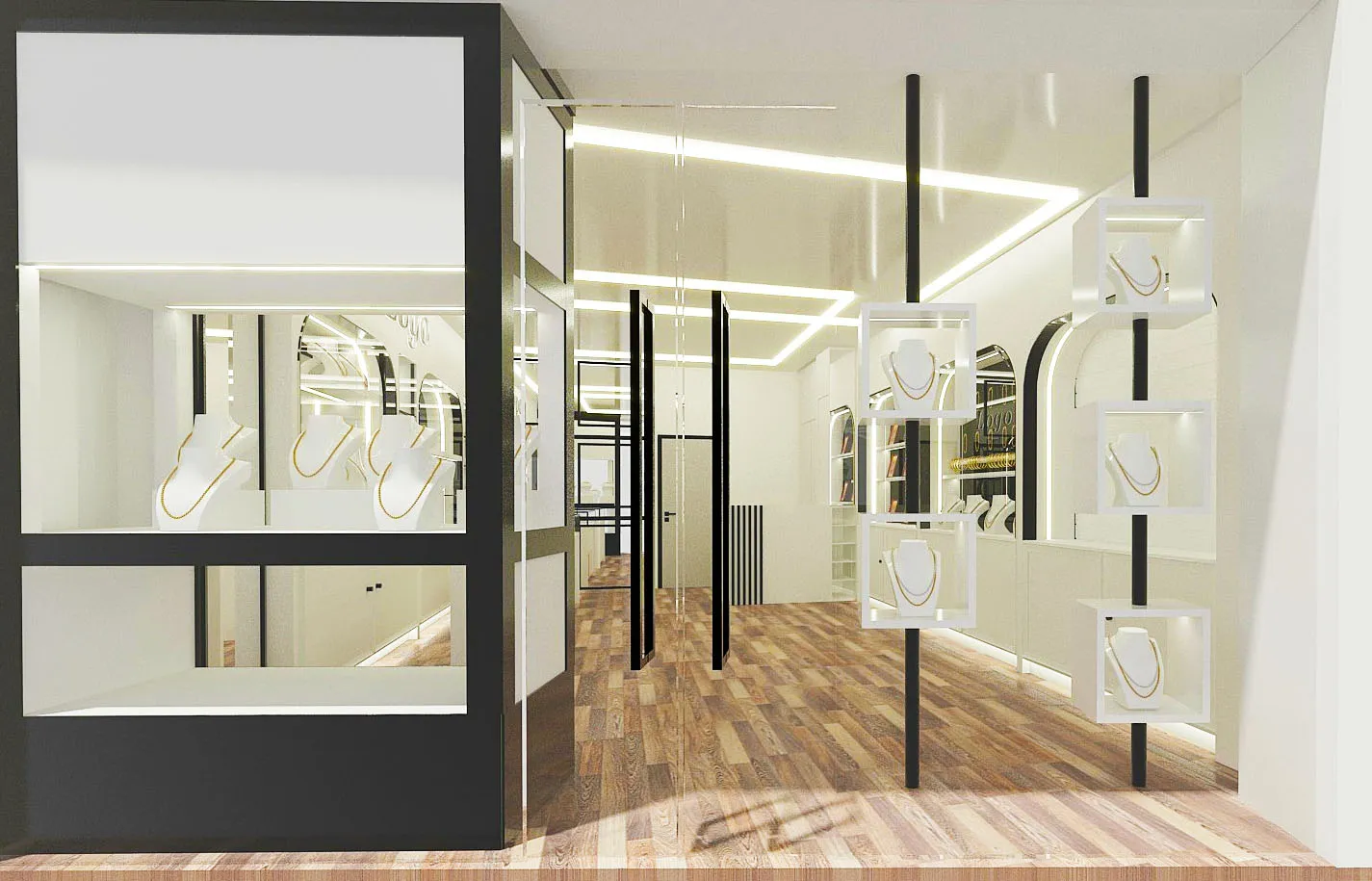
Whether you're designing a new store or upgrading an existing retail space, we always start with the same question: what should the customer feel the moment they walk in?